Working from home sounds dreamy until your back hurts, your desk looks like a junk drawer, and distractions creep in from every corner. I’ve been there. A good home office doesn’t need to be fancy or expensive, but it does need to work with you, not against you. The right setup can make focusing easier, keep your energy up, and honestly make workdays feel less like a drag.
This list isn’t about picture-perfect offices that no one actually uses. These are practical, realistic home office ideas for everyday productivity. The kind that fit into real homes, real routines, and real budgets. Ready to make your workspace pull its weight?
1. Dedicated Desk Zone That Means Business

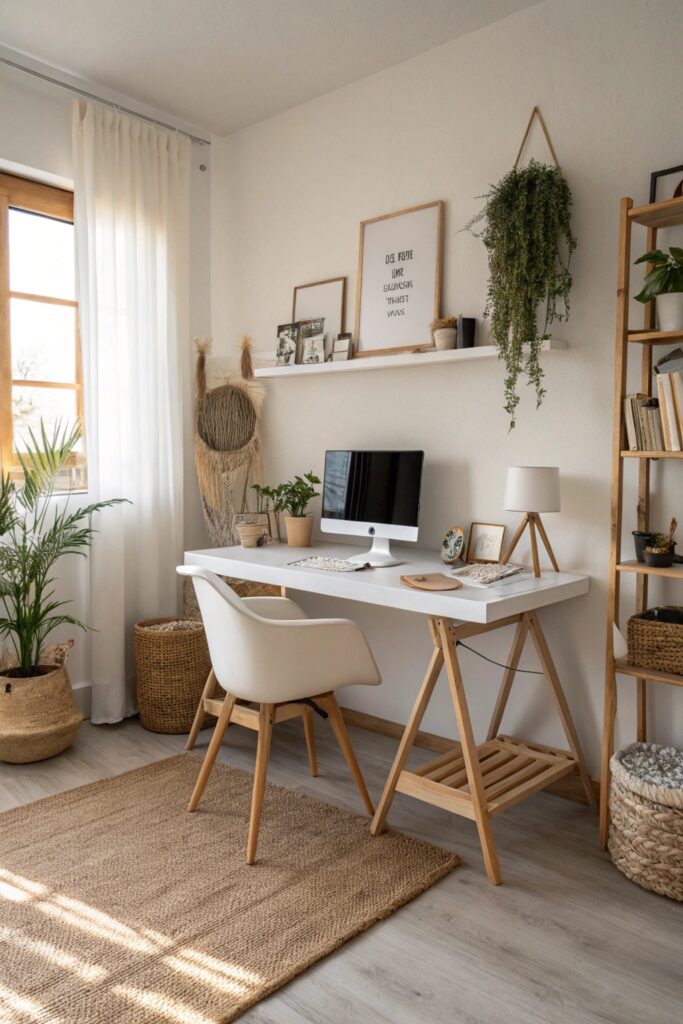
Working from the couch feels great for about ten minutes. After that, everything falls apart. A dedicated desk zone trains your brain to switch into work mode the moment you sit down. That mental cue matters more than most people realize.
Choose a desk that fits your space without cramping it. Even a small writing desk works if it stays clutter-free. Pair it with a comfortable chair and keep this area strictly for work. No meals, no random storage. Over time, this simple boundary boosts focus and makes starting work less painful.
2. Ergonomic Chair You’ll Actually Sit In
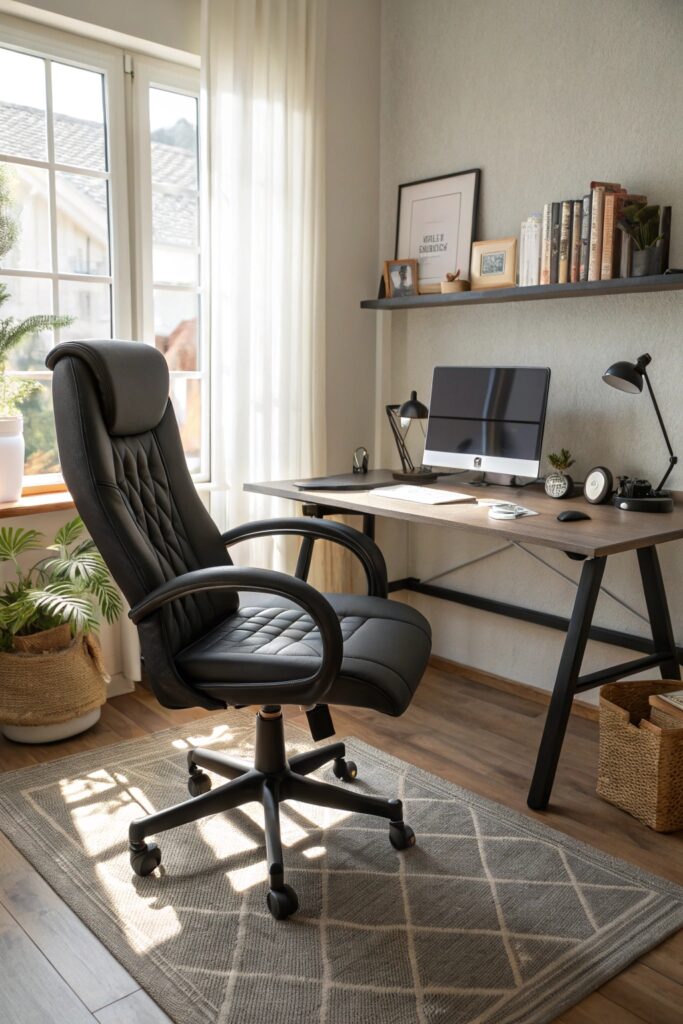
I ignored ergonomics for years and paid for it with constant neck pain. Lesson learned. A supportive chair changes everything. You don’t need a luxury model, but you do need proper back support and adjustable height.
Look for:
- Lumbar support
- Adjustable armrests
- Breathable material
When your body feels supported, your mind stays focused longer. IMO, this is one upgrade that pays off fast.
3. Natural Light Placement Near a Window
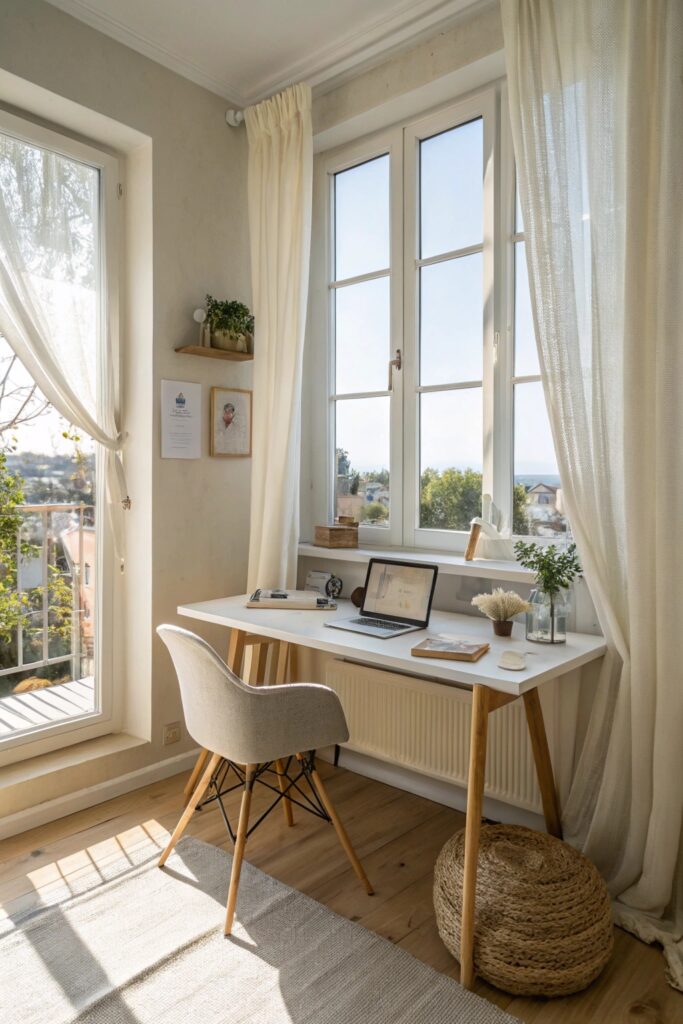
Natural light does wonders for energy and mood. If possible, place your desk near a window but not directly facing harsh glare. Side lighting works best and reduces eye strain.
I noticed I feel less drained on days when sunlight hits my workspace. Bonus: natural light makes even basic setups look better on video calls. Productivity improves when your space feels alive instead of cave-like.
4. Minimal Desk Setup for Clear Thinking
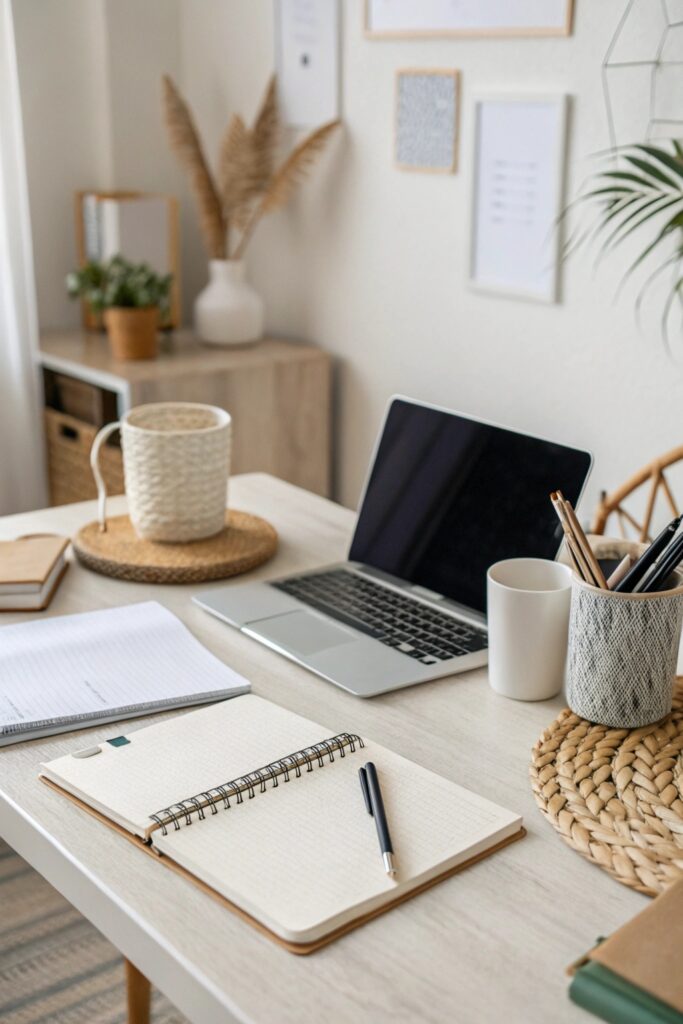
A crowded desk equals a crowded mind. Every item on your desk should earn its place. Keep only what you use daily within arm’s reach.
Stick to essentials like:
- Laptop or monitor
- Notebook
- Pen holder
- Water bottle
Store everything else out of sight. You’ll waste less time searching for things and more time actually getting work done.
5. Floating Shelves for Smart Storage
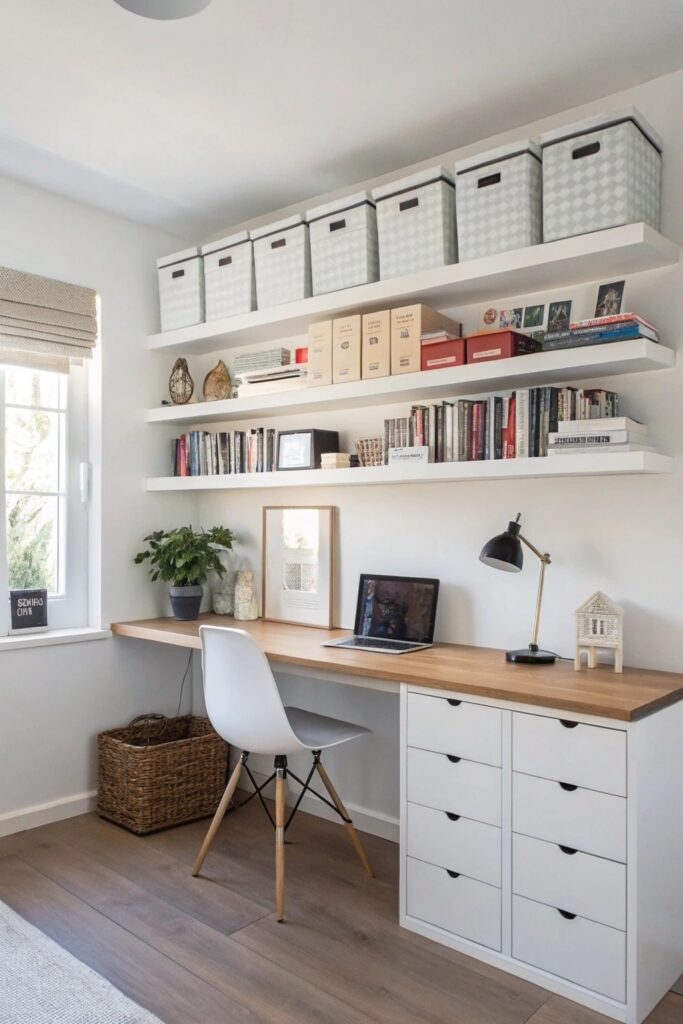
When floor space feels tight, go vertical. Floating shelves add storage without making the room feel heavy. I love them for books, files, and small decor.
Keep shelves organized and avoid overloading them. Use baskets or labeled boxes to maintain order. This keeps visual clutter low while still giving you easy access to what you need.
6. Calm Color Palette That Reduces Stress
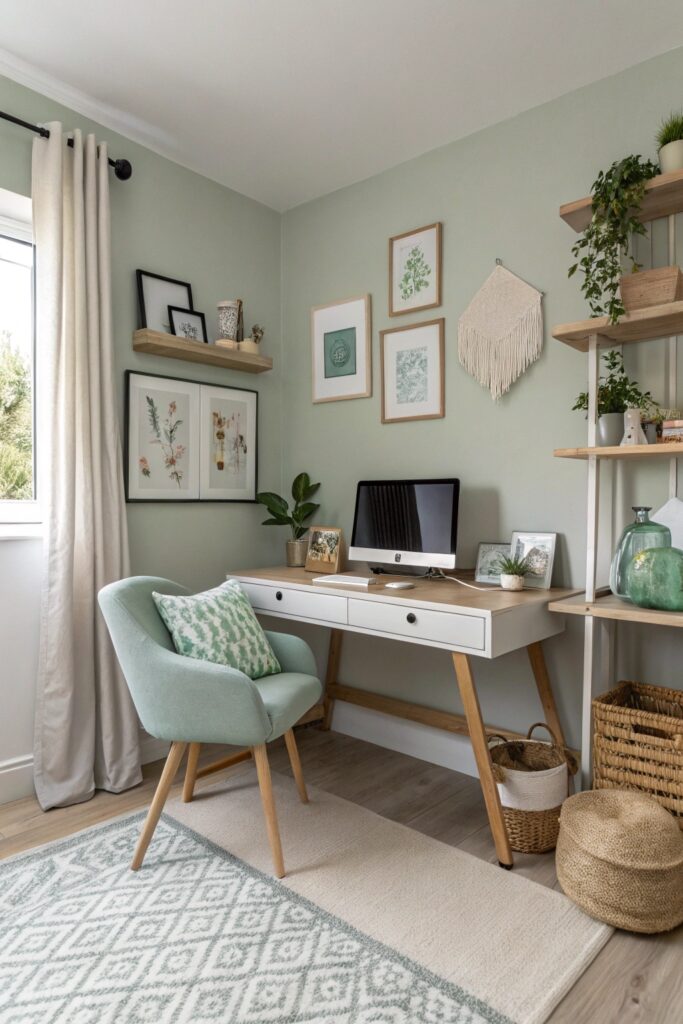
Color affects focus more than we admit. Loud colors can overstimulate, while calm tones help you settle in. Soft neutrals, muted greens, or warm grays work well for everyday productivity.
You don’t need to repaint the entire room. Start with:
- Desk accessories
- Wall art
- Chair or rug
Small changes can shift the entire mood of your home office.
7. Proper Lighting Beyond the Ceiling Light
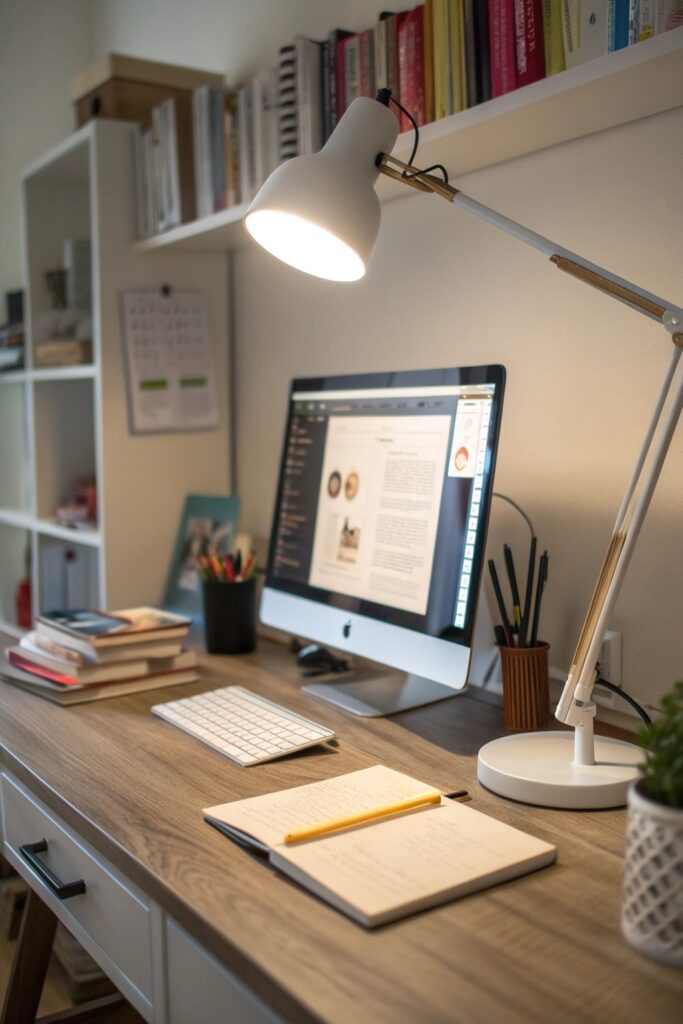
Overhead lighting alone rarely cuts it. Task lighting makes a huge difference, especially during long work hours. A desk lamp with adjustable brightness helps reduce eye strain and keeps you alert.
Warm light feels cozy but can make you sleepy. Neutral or cool light works better for focus. FYI, lighting upgrades cost less than most people think and deliver big returns.
8. Cable Management That Saves Your Sanity
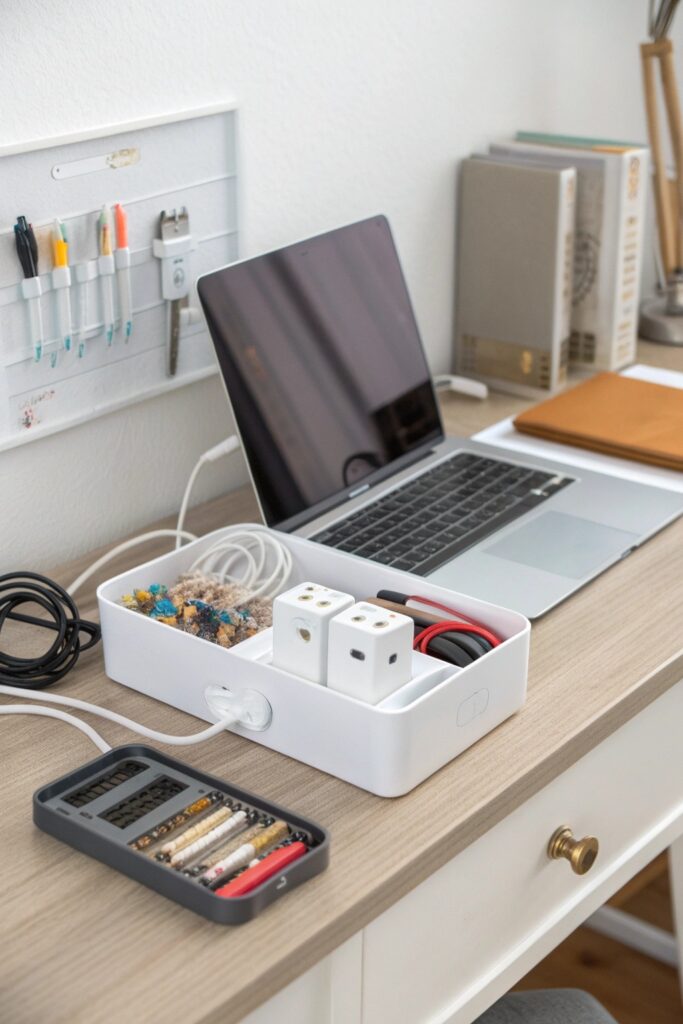
Messy cables create visual chaos and constant annoyance. Once I cleaned up my cords, my desk instantly felt calmer. It’s a small fix with a big mental impact.
Use:
- Cable clips
- Cord boxes
- Under-desk trays
When everything stays in place, distractions disappear and your workspace feels intentional.
9. Personalized Decor That Motivates You
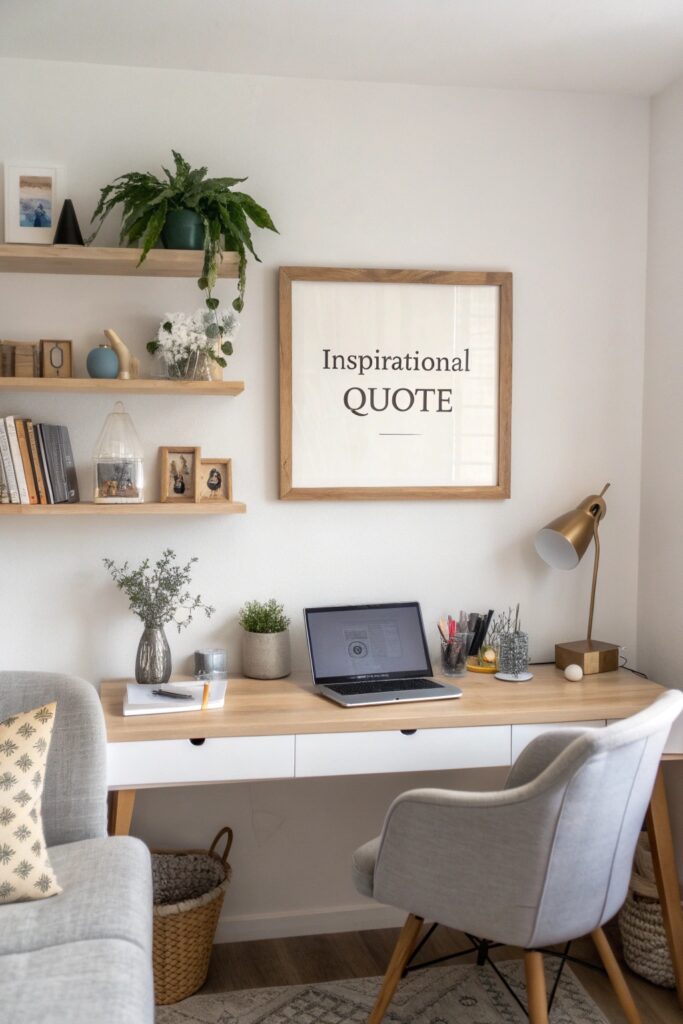
A sterile office drains creativity. Personal touches remind you why you work in the first place. The key is balance. Add inspiration without clutter.
Ideas that work:
- One framed quote
- A plant
- A photo that makes you smile
If it motivates you without stealing attention, it belongs.
10. Greenery That Brings Life to the Room
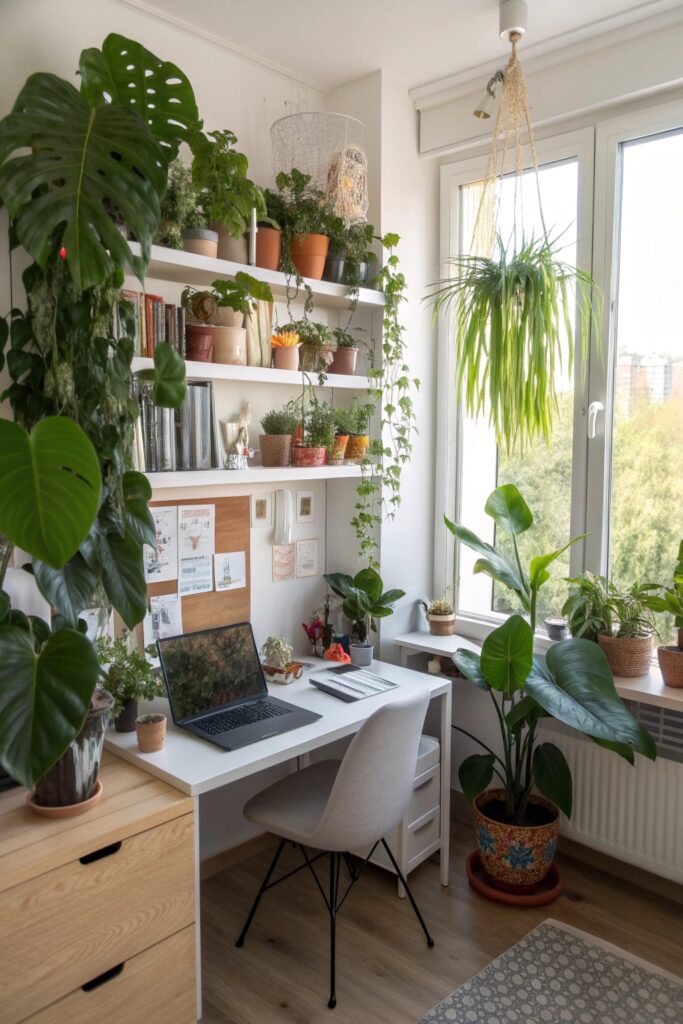
Plants do more than look nice. They soften the space and make it feel welcoming. Even low-maintenance options like snake plants or pothos work well.
I noticed my office feels less stressful with greenery around. You don’t need a jungle. One or two plants add enough life to make the space feel human.
11. Noise Control for Better Focus
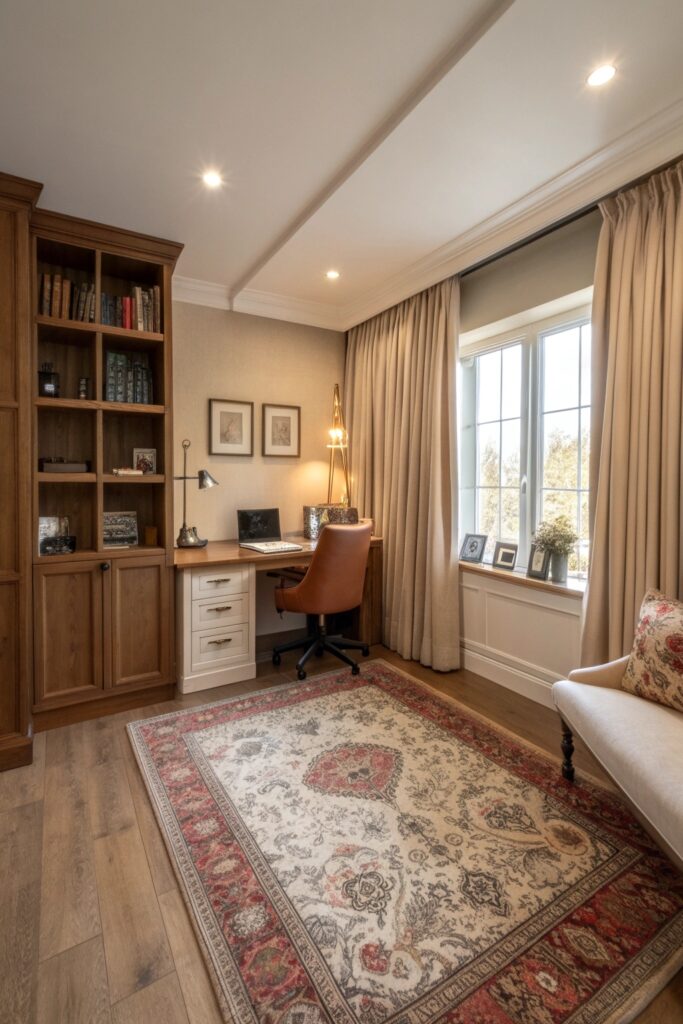
Noise kills productivity fast. If your home gets loud, sound control becomes essential. Noise-canceling headphones help, but so do soft furnishings.
Add:
- Area rugs
- Curtains
- Fabric chairs
These absorb sound and reduce echo. Quiet spaces support deeper focus, especially for calls or creative work.
12. Smart Storage for Paper and Supplies
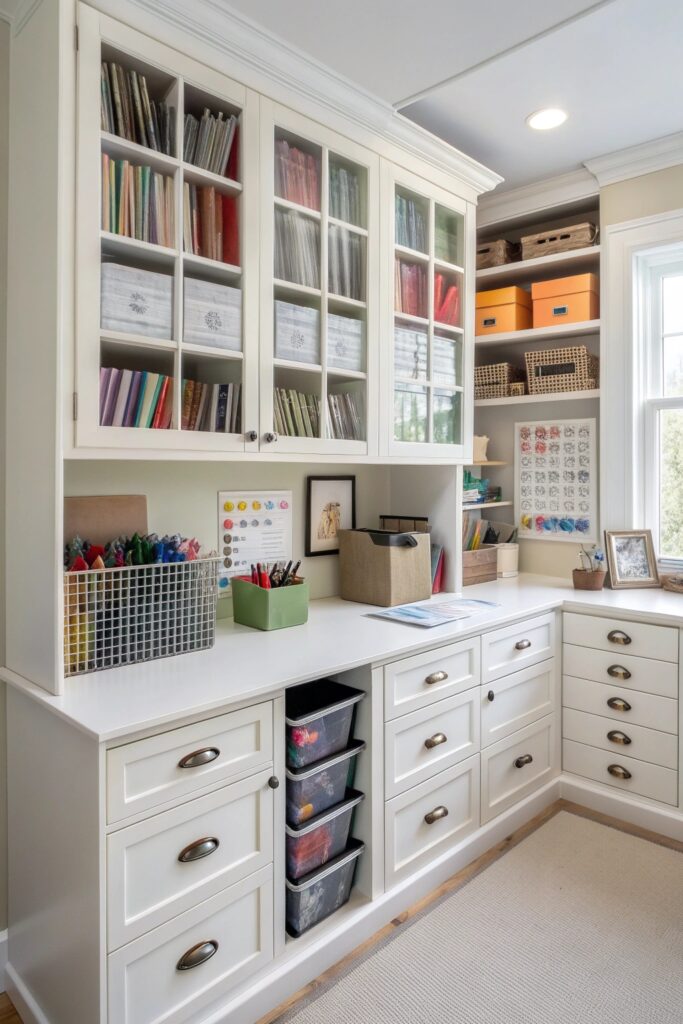
Loose papers create stress before you even start working. A simple filing system keeps things under control and easy to find.
Use drawers, folders, or small cabinets to store supplies. Label everything clearly. When you know where things live, your workflow stays smooth instead of frantic.
13. Tech Setup That Matches Your Workflow
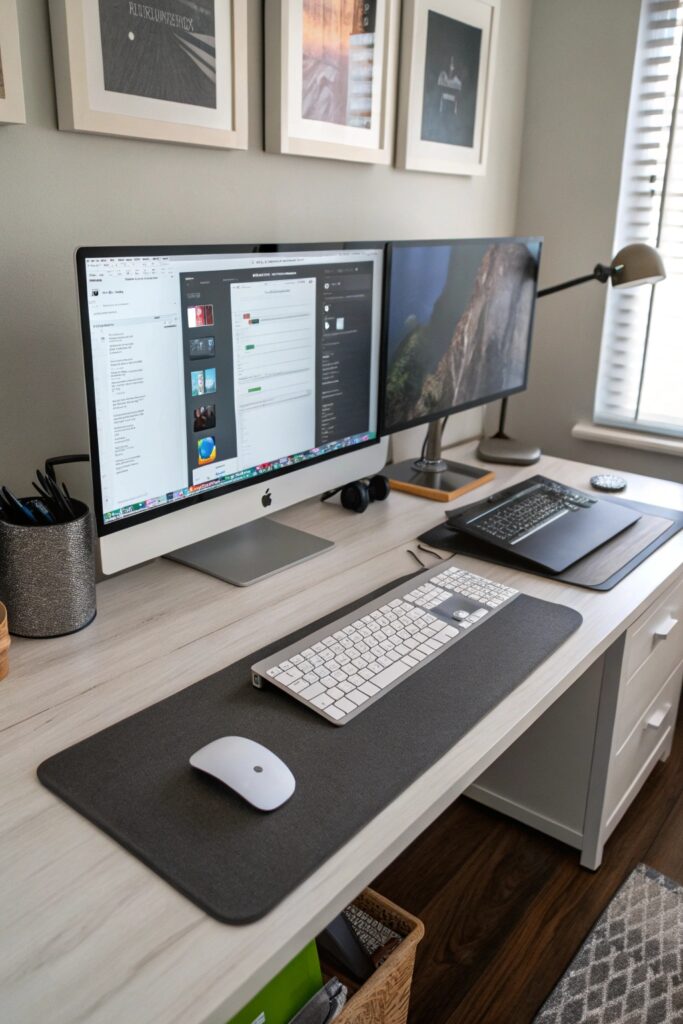
Your tools should support how you work, not slow you down. If you multitask, a second monitor helps. If you move around a lot, wireless accessories make sense.
Think about:
- Monitor height
- Keyboard comfort
- Mouse sensitivity
Fine-tuning your tech setup saves time and prevents frustration.
14. Flexible Layout That Adapts Over Time
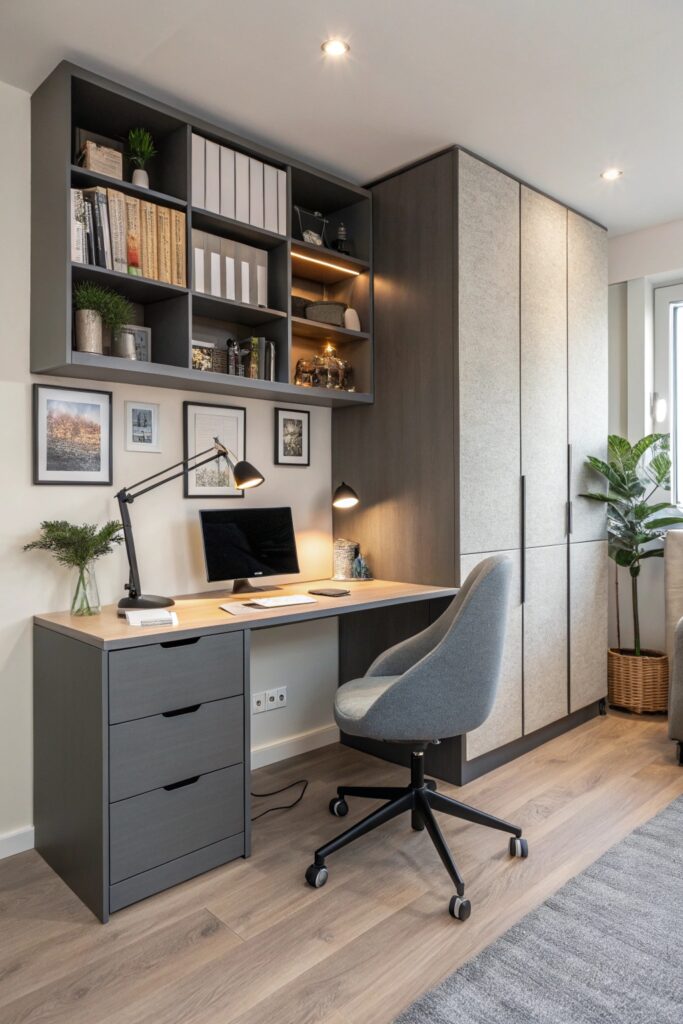
Your work needs change, and your office should adapt with you. Avoid locking yourself into a rigid layout. Modular furniture and movable pieces give you freedom.
I’ve rearranged my office more times than I can count, and each change improved how I worked. Flexibility keeps your space useful long-term.
15. Clear End-of-Day Reset Routine
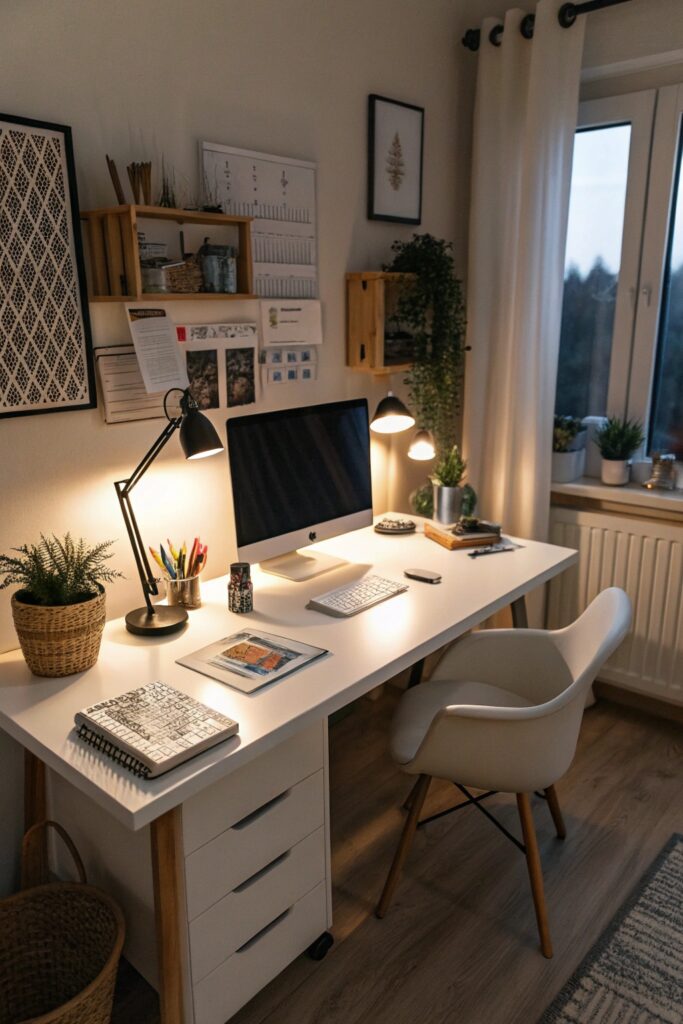
This isn’t furniture, but it matters. A quick reset at the end of the day keeps productivity high tomorrow. Clear your desk, shut down devices, and tidy up for five minutes.
This habit signals closure and prevents work from bleeding into personal time. The next morning feels lighter when you start fresh.
Conclusion
A productive home office doesn’t come from copying trends. It comes from understanding how you work and building a space that supports that rhythm. These home office ideas focus on comfort, clarity, and consistency, not perfection.
Start small. Fix one problem area and build from there. Over time, your workspace will feel less like a chore zone and more like a place where things actually get done. And trust me, future-you will appreciate every smart choice you make today.